The online courses that I offer are listed below. They are only available at certain times of the year dependent on the process but once you have signed up you have access to the content for a year. They are designed so that you can complete them at your own pace and you can log in to access them as many times as you like. If you have any questions about any of the courses then please contact me here.
How to ecoprint on paper

PLEASE NOTE this course is designed to be worked on at your own pace. Once you have signed up you will have access to the content for a year. To access the content you will receive a link and password in your confirmation email – please scroll to the bottom of your email to find this.
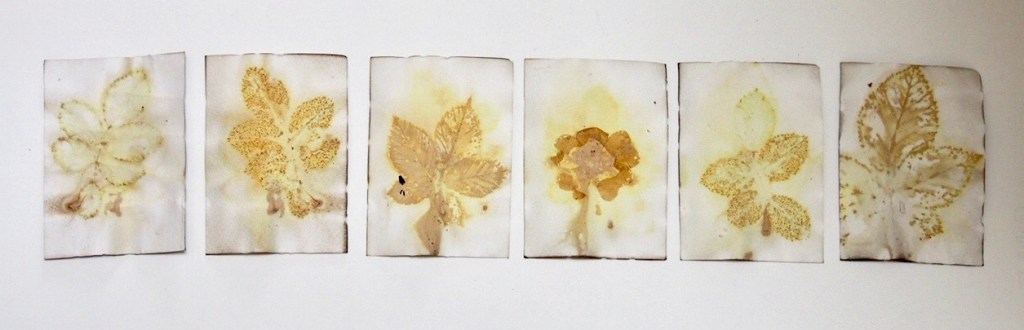
In this online course you will be introduced to the wonderful technique of ecoprinting (or botanical contact printing as it’s also known) and will learn how to create your own ecoprints on paper. Over three modules you will be taken through the steps to create your own prints. This technique can be done at home using a few basic materials and Autumn is a great time to have a go at this as there’s plenty of leaves available on the ground.
In module 1 you will gather together all the materials and equipment that you need, including plant matter, and prepare your prints by creating bundles ready for printing. In module 2 you will learn how to heat your bundles to create your prints and finally in module 3 you will unwrap your bundles to reveal your prints and decide how you would like to present them. This course has been designed so that you can complete it at your own pace and you will be taught through a combination of written text, photos and videos. You will have access to the course content for a year.
The cost of the course is £40 (including booking fee). Please scroll down to buy the course and for FAQs.
To see more examples of some of my ecoprints please click here and the hear me talking about some of the prints I’ve made please click here or watch below.
FAQs
How much does the course cost?
The cost of the course is £40.
When does the course start and how long does it run for?
Once you have purchased it you will be sent a confirmation email with a link and password to access the content. It has been designed to be worked on at your own pace, across three modules, which you will have access to for a year.
How do I access the course content?
You will be sent a link and password to access the modules when you sign up. Please scroll to the bottom of your confirmation email to find this.
How will I be taught?
You will be taught through a combination of written text, photos and videos. There is no live component to this course.
Do I need specialist equipment?
No, you do not need any specialist equipment to complete the course. A full list of the equipment needed is provided in the first module.
Is this course appropriate for children?
No, due to the methods used in this technique it is not appropriate for children.
What’s the refund policy?
As this is an online course there are no refunds available.
How can I contact the organiser with any questions?
Please contact me with any questions about the course through the contact section above.
Introduction to Solar dyeing with plants
PLEASE NOTE this course is designed to be worked on at your own pace. Once you have signed up you will have access to the content for a year. To access the content you will receive a link and password in your confirmation email – please scroll to the bottom of your email to find this.
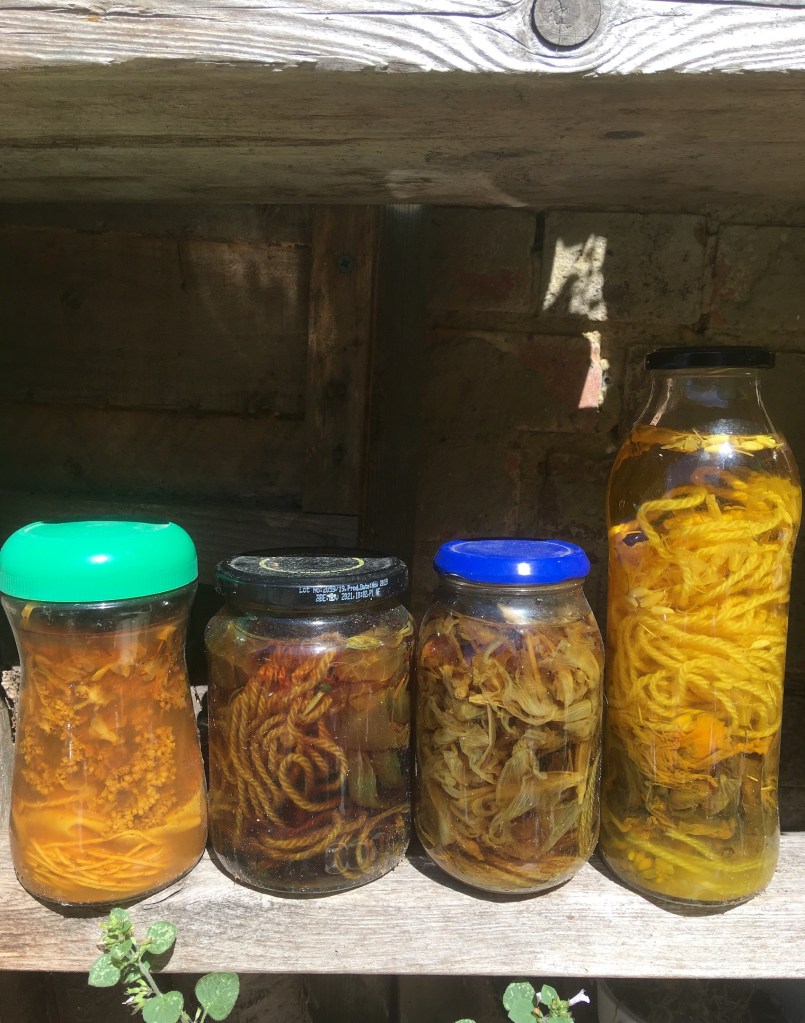
In this online course you will be introduced to the accessible, low/no-cost technique of solar dyeing and will learn how to use plants and flowers to dye fabric and yarns in glass jars using the heat from the sun.
This course has been designed so that you can complete it at your own pace. You will have access to the course content for a year and can log in as many times as you like. The modules will be delivered through a combination of written text, photos and videos.
The cost of the course is £25
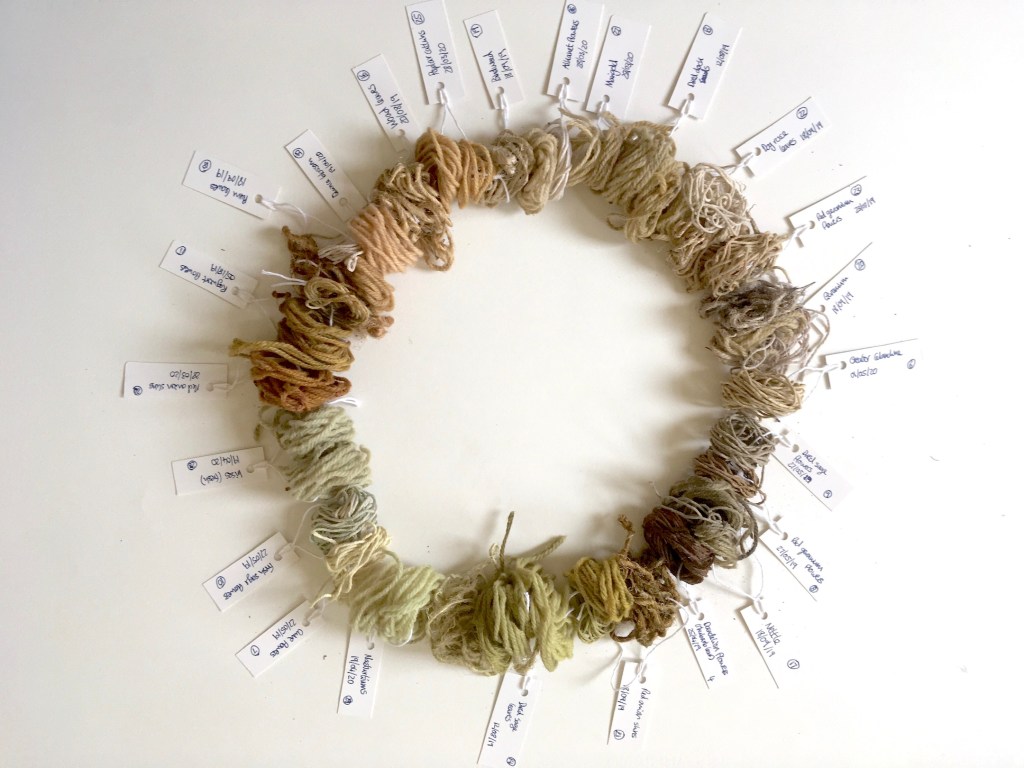
This course requires no previous knowledge and can be done at home using a few basic materials listed below in the FAQ section. It’s a great way of using up plant waste like onion skins, wilting flowers, and leaves pruned from plants for example. You can extract dye from a really wide range of plants and I’ll be going through lots of examples in the course including images of the colours that you can achieve – some of the colours are shown in the image above.
In module 1 you will be introduced to the technique before going through a step-by-step process of how to dye using onion skins. This is to introduce you to the technique and will also give you an opportunity to have a go hopefully without having to invest in any materials as all you will need are:
Onion skins from 3 or 4 onions
An empty glass jam jar
An old white cotton t-shirt or pillowcase (or other cotton fabric which you are happy to cut up)
In module 2 you will learn how to dye using any plants or flowers with guidance on ratios and dyeing with different quantities. I will also go through more information on the process and give lots of examples of the colours you can achieve from different plants and flowers.
FAQs
How much does the course cost?
The cost of the course is £25
When does the course start and how long does it run for?
Once you have paid you will receive a confirmation email and your log in instructions will be at the bottom of this. You have access to the course for a year and can log in as many times as you like.
How do I access the course content?
Once you have paid you will receive a confirmation email and your log in instructions will be at the bottom of this. You have access to the course for a year and can log in as many times as you like. and complete it at your own pace.
Do I need specialist equipment?
No, you do not need any specialist equipment to complete the course. Here is a list of the equipment you will need:
• Plant matter (for the first module you will need to collect onion skins from 3 or 4 medium sized onions)
• Empty clear glass jars with lids
• Fabric or yarn made from natural fibres eg. cotton, wool, silk
• Alum powder (optional)
• Teaspoon
• Wooden stick or spoon
• Kettle
• A sunny place outdoors or next to a window
• Paper bags for storing collected plant matter
Is this course appropriate for children?
Yes, this process can be done with children under adult supervision
What’s the refund policy?
As this is an online course there are no refunds available
How can I contact the organiser with any questions?
You can contact me using the contact page on this website
Terms & Conditions
 Sally Gunnett